Starting the Dialogue for Fossil Fuel Transition
One of our challenge is to create the dynamics of the transition. An interesting analysis is the dynamics of change used in the field of addiction as proposed by Prochaska et al. in their book : “Changing for good : the revolutionary program that explains the six stages of change and teaches you how to free yourself from bad habits”
If we consider that climate change action means free yourself from the bad habit of using fossil fuel, we can identify that the parts of the population is in different states with respect to the change for good.
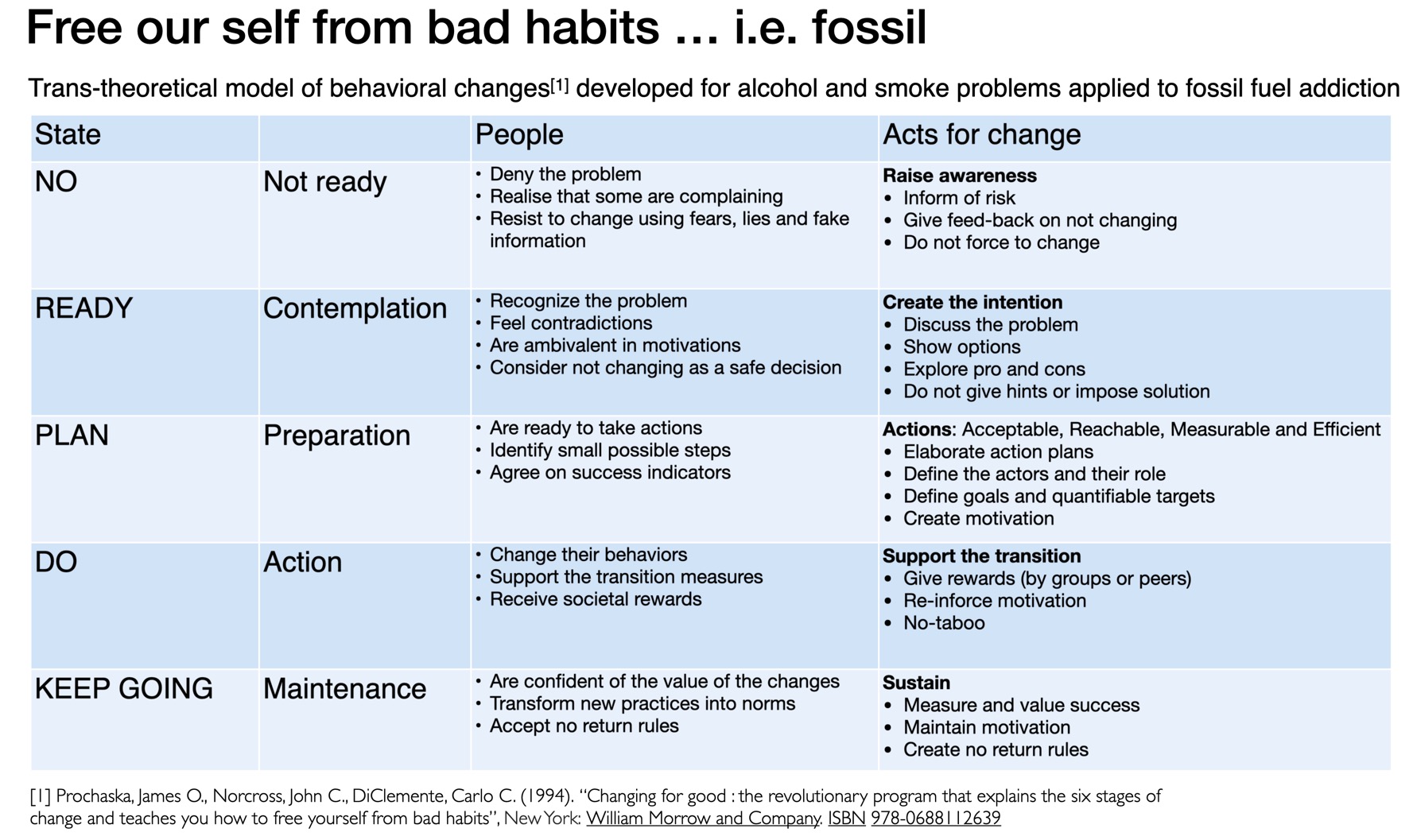
Engaging Different Groups in the Transition Away from Fossil Fuels
To address society’s addiction to fossil fuels, we need tailored messages for each stage of readiness. Here’s how we can start the dialogue for various groups:
1. Deniers (Not Ready)
Message: “Fossil fuels are a major driver of climate change, impacting health, jobs, and the planet we leave for our children. By exploring alternatives, we can protect our economy and create sustainable opportunities. Let’s start the conversation—no pressure, just shared concerns and facts.”
Approach: - Share relatable facts and trusted sources. - Avoid judgment or forcing a change. - Highlight risks in a non-confrontational way.
2. Contemplators (Ready to Reflect)
Message: “Recognizing the impact of fossil fuels is a big step. By exploring options, we can reduce harm to our planet and secure a better future for our children. Let’s weigh the pros and cons together, discussing practical solutions that benefit everyone without rushing decisions.”
Approach: - Discuss the issue openly. - Explore options and alternatives. - Emphasize benefits for future generations.
3. Planners (Preparing for Action)
Message: “You’re ready to act, and that’s powerful. Together, we can define clear steps to reduce fossil fuel use, set achievable goals, and create a healthier future for our children. Let’s build an action plan that works for you, focusing on meaningful and measurable progress.”
Approach: - Co-create actionable steps. - Define specific, measurable goals. - Build confidence in their readiness.
4. Action-Takers (Implementing Change)
Message: “Your actions are making a difference! By reducing fossil fuel use, you’re contributing to a healthier planet and a better future for our children. Stay motivated—every step counts. Let’s support each other, celebrate progress, and inspire more people to join the change.”
Approach: - Reinforce motivation with recognition. - Celebrate their progress and success. - Encourage peer influence and collaboration.
5. Maintainers (Committed to Change)
Message: “Your commitment to change is shaping a sustainable future for our children and our planet. By maintaining these new habits, you’re turning progress into lasting impact. Let’s keep the momentum, measure success, and inspire others to follow your example for a better tomorrow.”
Approach: - Measure and share progress. - Support habit reinforcement. - Highlight the long-term impact of their efforts.
Conclusion: Engaging society in the transition away from fossil fuels starts with understanding where people are in their readiness for change. Tailored dialogues create trust, build motivation, and guide communities toward sustainable actions for a healthier planet and future generations.